

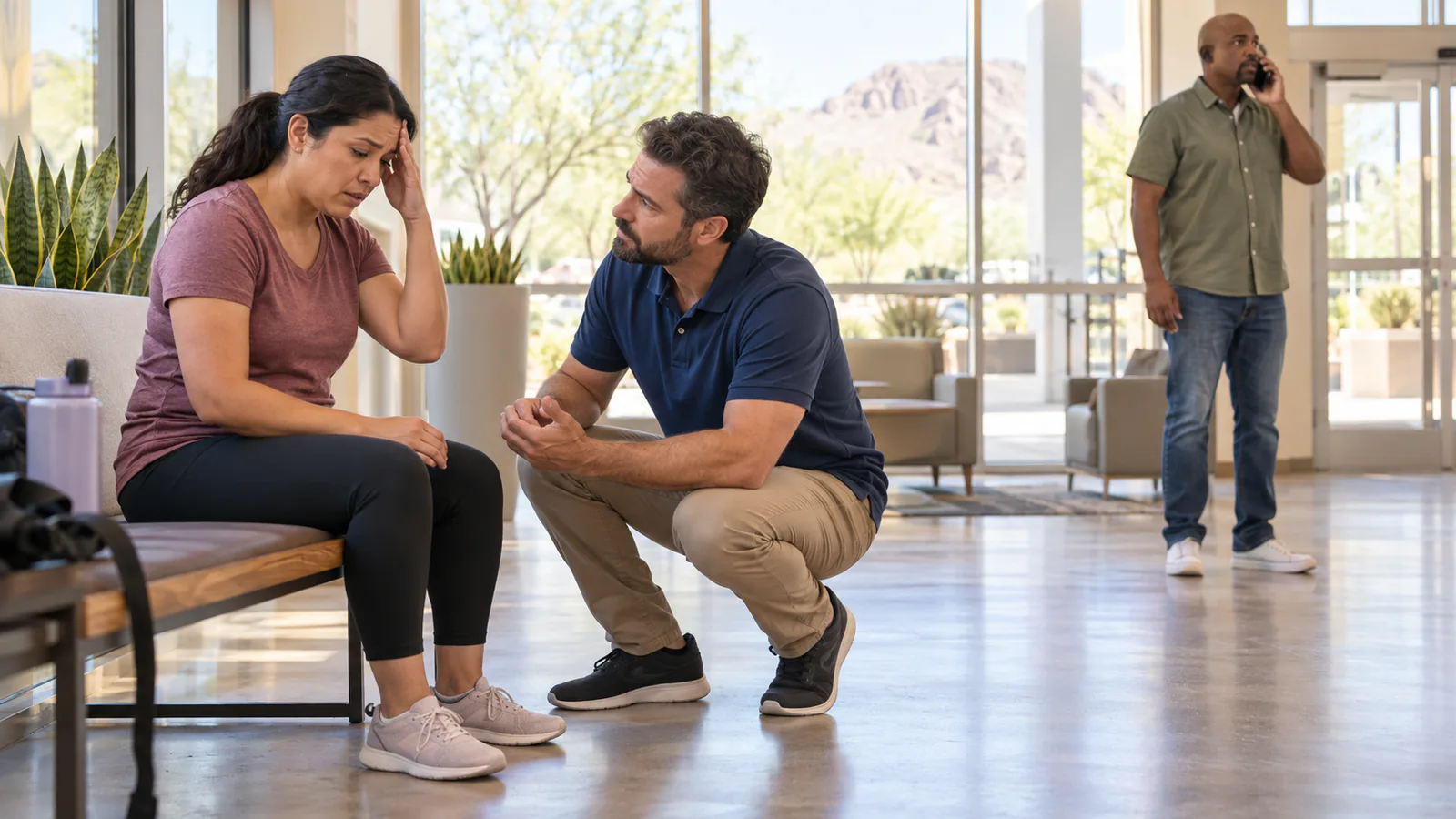
When someone collapses or gets hurt, the first minute can feel like chaos. The steps are simple: make sure the scene is safe, check whether the person responds, shout for help, call 911, get the AED and first aid kit, check breathing, and look for injuries.
You do not need to know what is wrong to do these steps well.
What is my job as a first aid provider?
Your job is to keep an injured or ill person safe and prevent further harm until help arrives. You are not expected to diagnose or treat like a nurse. You recognize the problem, get help coming, and act until responders take over.
That job matters more than most people think. About 350,000 people in the United States have a cardiac arrest outside a hospital each year, and about 90% do not survive. About 71% of adult cardiac arrests outside a hospital happen at home.
In 2024, only about 42% of them received CPR from a bystander. The person standing closest is the one who can change that.
Why do I check the scene before I help?
Scene first, always. Before you step in, look for traffic, fire, downed wires, water, chemicals, or an aggressive person. A second victim helps no one.
Ask yourself two questions:
- Is it safe? If not, do not go in. Call 911 and tell the dispatcher what you see.
- Can I handle it? If not, call for help right away.
In a daycare, that might mean checking for a spilled cleaning product before you kneel next to a child.
What are the key steps in any emergency?
There are seven key steps. With practice, you can run through all seven in under 30 seconds.
- Scene safe? Look before you go in.
- Tap and shout. Tap the shoulders of an adult or child, or the foot of an infant, and shout, “Are you OK?” No blink, movement, sound, or cry means the person is unresponsive.
- Shout for help. Point at one specific person for each job: “You, call 911. You, get the AED and first aid kit.” Pointing keeps everyone from assuming someone else already called.
- Call 911. Put the phone on speaker so your hands are free.
- Get the AED and first aid kit.
- Check breathing. Scan the chest for 5 to 10 seconds. Not longer.
- Look for injuries. Also look for medical jewelry, which can point to seizures, diabetes, or allergies.
These steps can overlap. You can check breathing while you talk to the dispatcher on speaker. For what happens after these first steps, see When to Call 911 in a Medical Emergency.
Gasping is not the same as breathing
In the first minutes of cardiac arrest, a person may make occasional, irregular gulps of air. This is called gasping, or agonal breathing, and it can look like the person is still breathing.
It is not. Gasping means start CPR.
A person in cardiac arrest may also briefly jerk or twitch as they collapse, which can look like a seizure. If they are not breathing normally afterward, start CPR.
If you cannot tell whether the person is breathing normally, treat it as not breathing. It is better to give CPR to someone who does not need it than to hold back CPR from someone who does. Our guide on how to do CPR covers the next steps.
Do I need gloves to give first aid?
Yes, whenever you can. This is called PPE, or personal protective equipment:
- Medical gloves (nonlatex if possible) for any first aid.
- Eye protection if there is blood or vomit.
- A mask if there are body fluids or a possible respiratory illness, and a CPR mask for rescue breaths.
Infections from giving first aid are rare, but treat all body fluids as if they could carry infection.
No gloves? Use your best judgment and still help. If blood gets on your skin or in your eyes or mouth, wash it off as soon as possible and report the exposure to a supervisor or EMS.
How do I take gloves off safely?
Remove gloves inside out so nothing on them touches your skin:
- Pinch one glove at the cuff and peel it off inside out.
- Hold that glove in your still-gloved hand.
- Slide two bare fingers inside the cuff of the other glove and peel it off over the first one.
- Throw both away according to your workplace policy.
- Wash your hands with soap and water for 20 seconds.
Hand sanitizer works if soap is not available, but soap and water is best after contact with blood.
What if the person is awake, or says no?
Ask a responsive adult before you help. If they say no, do not touch them, but you can still call 911 and stay nearby. For a child, ask a parent or guardian if one is there. Our article on Arizona’s Good Samaritan law and consent explains what the law covers.
This article is general education. It does not replace hands-on CPR and first aid training, where you practice these skills with an instructor.
How LP Health Directions can help
Practicing these steps out loud, with a manikin and an instructor, is what makes them automatic when it counts.
- CPR and First Aid classes at our Phoenix and Tucson Training Sites.
- On-site Group Training for daycares, schools, churches, and workplaces.
- First Aid Solutions for stocked first aid kits, gloves, and bleeding control kits.
- Browse every topic in our First Aid Guide.
- Ready to train? Book a class or contact us to set up a session for your team.
Sources
- American Heart Association, CPR Facts and Updated Guidelines 2025
- American Heart Association, Top Takeaways from the 2026 Heart Disease and Stroke Statistics Update
- American Heart Association, 2026 Heart Disease and Stroke Statistics Fact Sheet
- American Heart Association, 2025 Guidelines for CPR and Emergency Cardiovascular Care
Reviewed September 28, 2026. This article provides general education and does not replace first aid and CPR training, medical advice, or 911 guidance.