

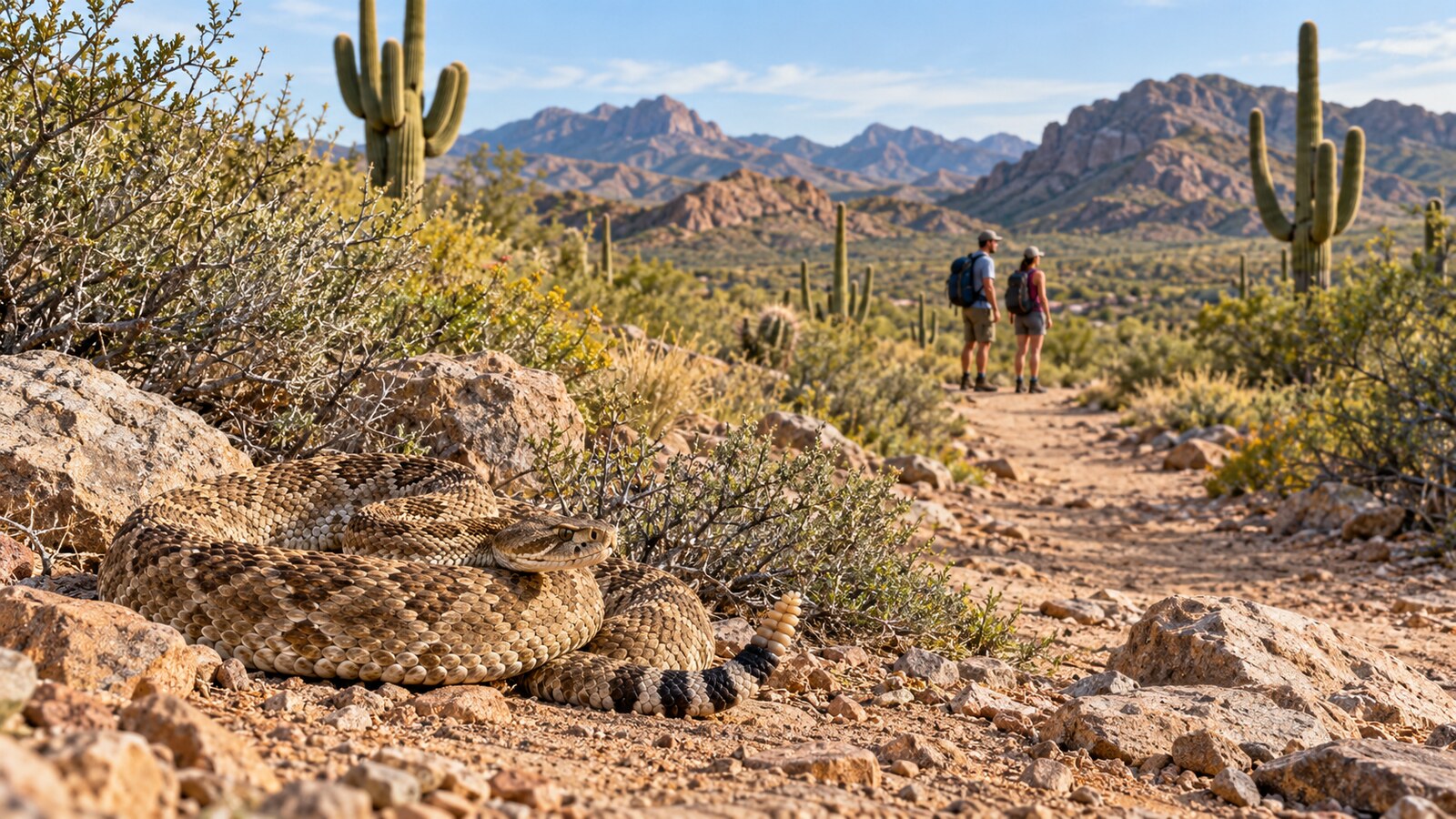
Whether you are hiking near Tucson, working outdoors in Phoenix, or stepping into your backyard, knowing how to avoid a snake encounter matters. If a bite happens, the priority is immediate emergency care. This guide focuses on Arizona rattlesnakes and practical steps for families, hikers, and outdoor workers.
If someone has been bitten
Call 911 immediately for a rattlesnake bite or any bite from a snake that could be venomous. Do not wait for symptoms, and do not drive yourself to the hospital. [1, 2]
- Get clear of the snake. Move only as needed for immediate safety, then sit or lie down. Do not approach, catch, or kill it.
- Keep the bitten arm or leg still and supported in a comfortable, neutral position. Minimize exertion without delaying emergency care. Follow the dispatcher’s instructions about movement.
- Remove rings, watches, and other tight items from the affected limb before swelling makes them difficult to remove.
- If it will not delay care, gently wash the bite with soap and water and cover it with a clean, dry dressing. Do not wrap it tightly.
- Watch breathing and responsiveness. Report any change to the dispatcher and follow their instructions, including CPR instructions if needed. [1, 2]
Do not cut the wound, suck out venom, apply ice, use electrical shock, or apply a tourniquet or pressure bandage. These measures can cause harm or delay effective care. [1]
How snake bites happen
Risk increases when someone gets too close to a snake, especially while trying to handle, move, or kill it. An encounter can also happen unexpectedly when a hand reaches into a hidden space or a foot lands beside a concealed snake. Rock crevices, woodpiles, brush, and poorly lit areas deserve extra attention. [3, 4]
Do not rely on hearing a warning. Rattlesnakes do not always rattle before biting. The safest habit is to watch where you place your hands and feet and give every snake plenty of room. [2, 3]
Preventing bites around your home
Start with the places you use every day. Keep walkways visible and use outdoor lighting or a flashlight after dark. Wear shoes or boots rather than stepping outside barefoot. Look before reaching behind a planter, into a woodpile, or beneath outdoor equipment. [3]
Reduce piles of wood, brush, and other debris that can provide hiding places, but inspect the area before beginning cleanup. If you find a snake, stop and move away. Keep children and other people back, and contact a qualified removal professional when removal is needed. Do not attempt relocation yourself. [4]
Staying safer on Arizona trails
Stay on established trails, look ahead, and wear long pants with sturdy shoes or boots. Before stepping over a rock or log, make sure you can see where your foot will land. If a snake blocks your route, give it a wide berth or turn back rather than trying to move it. [4, 5]
Plan how you would get help before leaving. Carry a phone and tell someone your route. For remote areas, consider how you will contact rescuers if cell service is unavailable. Knowing the trail name and access points can help you describe your location during an emergency. Avoid hiking remote areas alone. [5]
Teaching children and preparing workers
Give children a simple rule: leave snakes alone, back away, and tell an adult. Practice that response before a hike or backyard play. Children should never approach a snake to identify it, photograph it, or check whether it is alive. Adults should follow the same rule. [4, 5]
Outdoor employers should include snake awareness in safety training. Workers need to know local hazards, how to avoid encounters, and what to do after a bite. CDC recommends boots and long pants for outdoor work and leather gloves when handling brush and debris. Gloves do not make handling a snake safe. [2]
A practical workplace response plan should identify who calls 911, how to give the jobsite location, and where emergency responders can enter. Make sure new employees and temporary crews know the plan.
Snake bite myths that can cause harm
- Suction kits do not reliably remove venom and can damage tissue. Cutting the bite creates another injury. [1, 3]
- Ice, electrical shock, tourniquets, and tight compression wraps are not recommended for Arizona rattlesnake bites. Keeping a limb still does not mean squeezing it. [1]
- You do not need to capture the snake for treatment. Doing so risks another bite and wastes time. Even a dead venomous snake can bite reflexively. [3]
- Feeling fine does not prove the bite is harmless. Symptoms may be delayed, so immediate hospital evaluation is still necessary. [6]
What happens at the hospital
Emergency clinicians evaluate the bite, watch for changes, and decide what treatment is needed, which may include antivenom. Stay for the evaluation and observation the medical team recommends, even if pain or swelling seems minor. First aid cannot determine safely at home whether venom was injected. [4, 6]
Follow the hospital’s discharge and follow-up instructions. For poison-related questions, Poison Help is available at 800-222-1222. After a suspected venomous snakebite, calling Poison Help should not delay calling 911 or receiving emergency care. [1, 7]
Build your first aid skills
A clear plan helps families and teams respond when someone needs help. Contact LPHD to discuss first aid training for your household or workplace. Learning how to recognize an emergency, call for help, and support an injured person is useful preparation for everyday life in Arizona.
This article provides general education and does not replace emergency medical care or instructions from a dispatcher or treating clinician.