

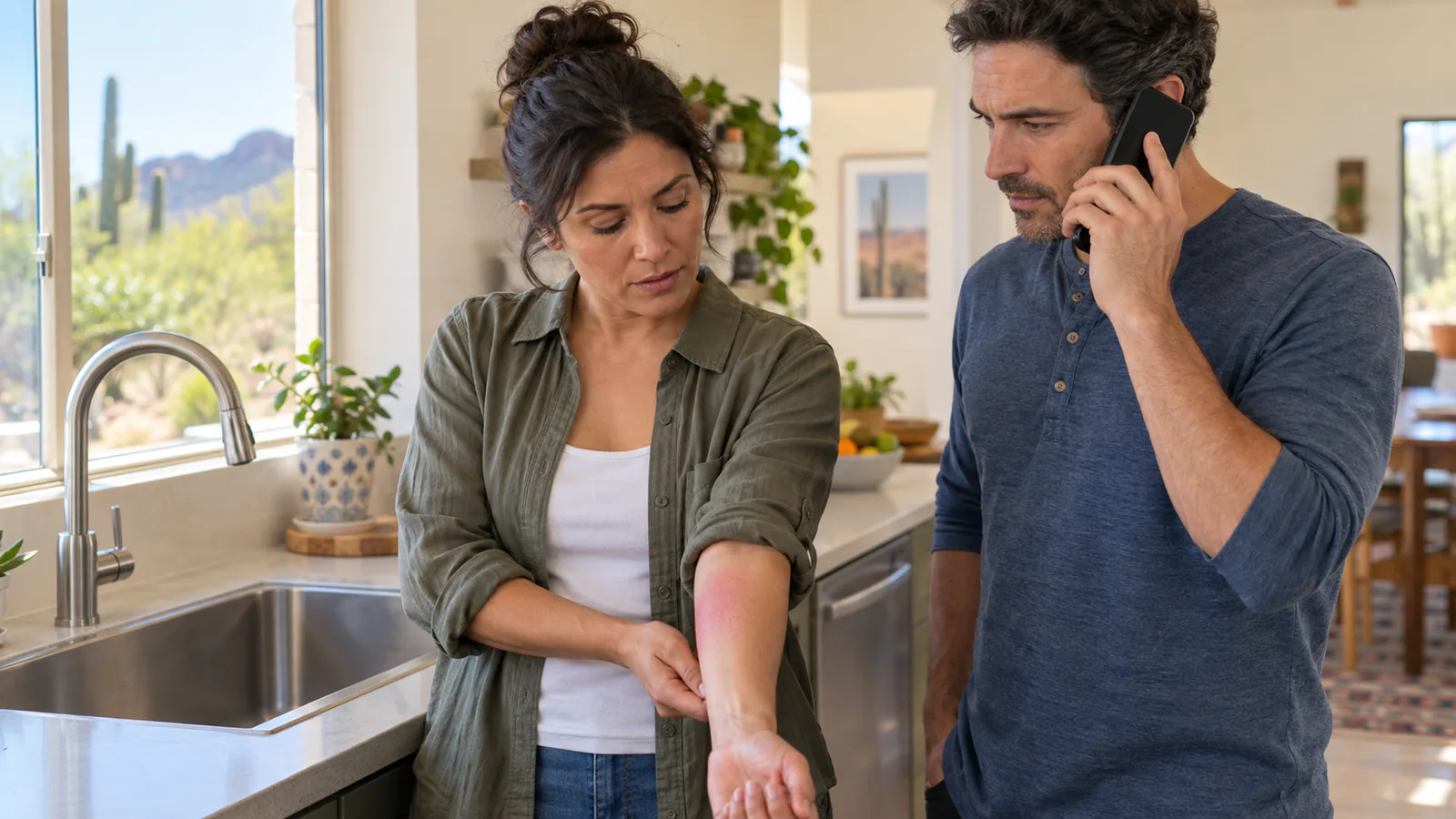
For a heat burn, cool it right away under cold (not freezing) running water for at least 5 minutes, then cover it with a clean, dry dressing. Never put ice on a burn. Electrical and chemical burns need different first steps, and both need a call to 911.
Burns happen in church kitchens, school cafeterias, and daycare break rooms: hot coffee, a pan handle, a coffee urn. Knowing the first few minutes of care keeps a small burn from getting worse.
What is the first thing to do for a burn?
Check the scene first. Make sure whatever caused the burn, like a stove, hot liquid, or open flame, is no longer a danger to you or the person. Put on gloves if you have them.
Then cool the burn with cold, not freezing, running water for at least 5 minutes. If running water isn’t possible, use a cool compress.
Cooling a burn is not the same as icing it
This is the most common burn mistake. Cold water from the tap is the right choice. Ice is not.
Ice damages the burned tissue, which is why the water should be cold but not freezing. Skip the freezer and go straight to the sink.
After cooling, antibiotic ointment or petroleum jelly is fine for a small burn if you have it, and over-the-counter pain medicine can help with pain.
How do you treat a small heat burn?
- Cool it under cold, not freezing, running water for at least 5 minutes.
- Apply antibiotic ointment or petroleum jelly if available.
- Cover it with a clean, dry dressing.
- Give over-the-counter pain medicine if appropriate. For children, follow your workplace medication policy and get a parent’s OK.
When does a burn need medical care?
Get medical care for a burn that is:
- Larger than the person’s palm
- On the face, hands, feet, or genitals
- Caused by electricity or a chemical
Call 911 for any serious burn, and whenever you aren’t sure.
What do you do for a large burn?
Call 911. Cool the burn with water, then cover it with a clean dressing.
Next, keep the person warm with a dry blanket to help prevent shock. Stop cooling if they start shivering, get cold, or become drowsy, and wait for EMS. Watch for signs of shock, such as a fast heartbeat, confusion, and pale, cool, or sweaty skin.
What if someone’s clothing catches fire?
Stop, drop, and roll. Have the person stop where they are, drop to the ground, and roll to put out the flames. Then cover them with a wet blanket.
Remove jewelry and any clothing that isn’t stuck to the skin. Leave clothing that is stuck in place. Then cool the burn and call 911.
What should you do for an electrical burn?
Never touch someone who is still in contact with a power source. You could be injured too.
- Turn the power off first, but only if you can do it safely.
- Call 911 and get an AED. Electricity can stop the heart.
- Check whether they are breathing normally. If they are unresponsive and not breathing normally, or only gasping, start CPR and use the AED as soon as it arrives.
Anyone with an electrical injury needs medical care, even if the burn looks small.
What should you do for a chemical burn?
Chemical burns can come from cleaning products, pool chemicals, or supplies in a maintenance closet.
- Call 911, then call Poison Control at 1-800-222-1222.
- Put on gloves. Remove contaminated clothing without getting the chemical on yourself.
- Flush the skin with clean running water for at least 15 minutes, unless 911 or Poison Control tells you otherwise.
- Cover the area loosely.
At work, check the safety data sheet for the product and involve your on-site safety staff. For chemicals in the eyes or swallowed, see poisoning first aid.
Burns and children
The palm rule uses the burned person’s own palm, so on a small child, a fairly small burn already needs medical care. So does any burn on a child’s hands or face. Cool it the same way, cover it, and contact the parent or guardian. Follow your daycare or school policy for injuries and medicine.
This article is general education. It does not replace hands-on CPR and first aid training, where you practice these skills with an instructor.
How LP Health Directions can help
Our first aid classes cover heat, electrical, and chemical burns, along with CPR and AED skills for when an electrical injury stops the heart.
- CPR and First Aid classes at our Phoenix and Tucson Training Sites.
- On-site Group Training for daycares, schools, churches, and workplaces.
- First Aid Solutions to keep burn dressings and gloves stocked in your kit.
- AED Solutions for AED sales, leasing, and management.
- Book a class or contact us to train your team.
Sources
- American Red Cross, Burns
- Mayo Clinic, Burns: First aid
- HRSA, Poison Help (1-800-222-1222)
- American Heart Association, 2025 Guidelines for CPR and ECC
Reviewed September 28, 2026. This article provides general education and does not replace first aid and CPR training, medical advice, or 911 guidance.