

If you think someone has been poisoned, first make sure the scene is safe for you. Then call 911, and after that call Poison Control at 1-800-222-1222. Do not give anything to drink, and do not give any antidote, unless 911 or Poison Control tells you to.
A poisoning can come from something swallowed, breathed in, or touched. In daycares, schools, and churches, the usual suspects are ordinary: medicines, cleaning products, and fumes.
Is the scene safe?
Scene safety comes first in every emergency, and poisoning is where it matters most. Look for warning signs before you step in:
- Spilled or leaking containers
- Odd smells or hissing gas
- Pill bottles or open medicine
- Cleaning products left out
If several people suddenly feel sick in an enclosed space, think about carbon monoxide or another gas. If the scene seems unsafe, do not go in. Evacuate everyone and call 911 from outside. A second person getting sick helps no one.
What should you do for a poisoning?
- Call 911 and send someone for the first aid kit and an AED. Tell the dispatcher what the substance is, if you know.
- Call Poison Control at 1-800-222-1222. It is available 24 hours a day, 7 days a week.
- Follow their instructions. Give drinks or antidotes only if 911 or Poison Control tells you to.
- Watch their breathing. If they become unresponsive and are not breathing normally, start CPR and use the AED.
Some poisonings involve opioids, such as a child who finds a family member’s prescription pills or an older adult who took too much pain medicine. Signs include slow or no breathing, tiny pupils, and blue or gray lips. If you suspect an opioid, give naloxone. See how to use Narcan.
If the substance is on the person’s lips or mouth, use a pocket mask for rescue breaths. Our guide on how to do CPR covers the steps.
What should you tell Poison Control?
Have this ready when you call:
- What the substance is. Bring the bottle or package to the phone if it is safe to handle.
- How much they took or were exposed to.
- How it got in: swallowed, breathed in, or touched.
- The person’s age and weight.
- When it happened.
If you do not know an answer, say so and share what you do know.
What if poison gets on the skin?
- Get the person to fresh air.
- Put on gloves.
- Remove contaminated clothing.
- Brush off any powder with a gloved hand.
- Rinse the skin with running water for at least 15 minutes.
What if poison gets in the eyes?
Rinse the eye with clean water for at least 15 minutes. An eyewash station, faucet, hose, or saline all work. If only one eye is affected, keep that eye lower, so the chemical does not wash into the other eye. Then get medical care.
Poison Control is not the same as 911
People often ask which number to call. They do different jobs.
9-1-1 is how you get emergency responders to your location. Call it first when someone has been poisoned, and call it right away if the person has trouble breathing, is hard to wake, has a seizure, or if several people are sick.
Poison Control (1-800-222-1222) is a phone line for expert advice about the specific substance. They tell you what to do next, including whether it is safe to give a drink and what to watch for.
Our classes teach both, in that order: 911 first, then Poison Control. When in doubt, call 911. For a broader checklist, see when to call 911.
Who answers Poison Control in Arizona?
Arizona has two poison centers. The Banner Poison and Drug Information Center is in Phoenix, and the Arizona Poison and Drug Information Center is in Tucson. Both answer at the same national number, 1-800-222-1222, so you only need to remember one.
Arizona poison centers also help with scorpion and spider stings. See bites and stings first aid. For a pet that got into something, call Animal Poison Control at 888-426-4435.
How can daycares and churches prevent poisoning?
Prevention is the best poisoning first aid. For any place that cares for children:
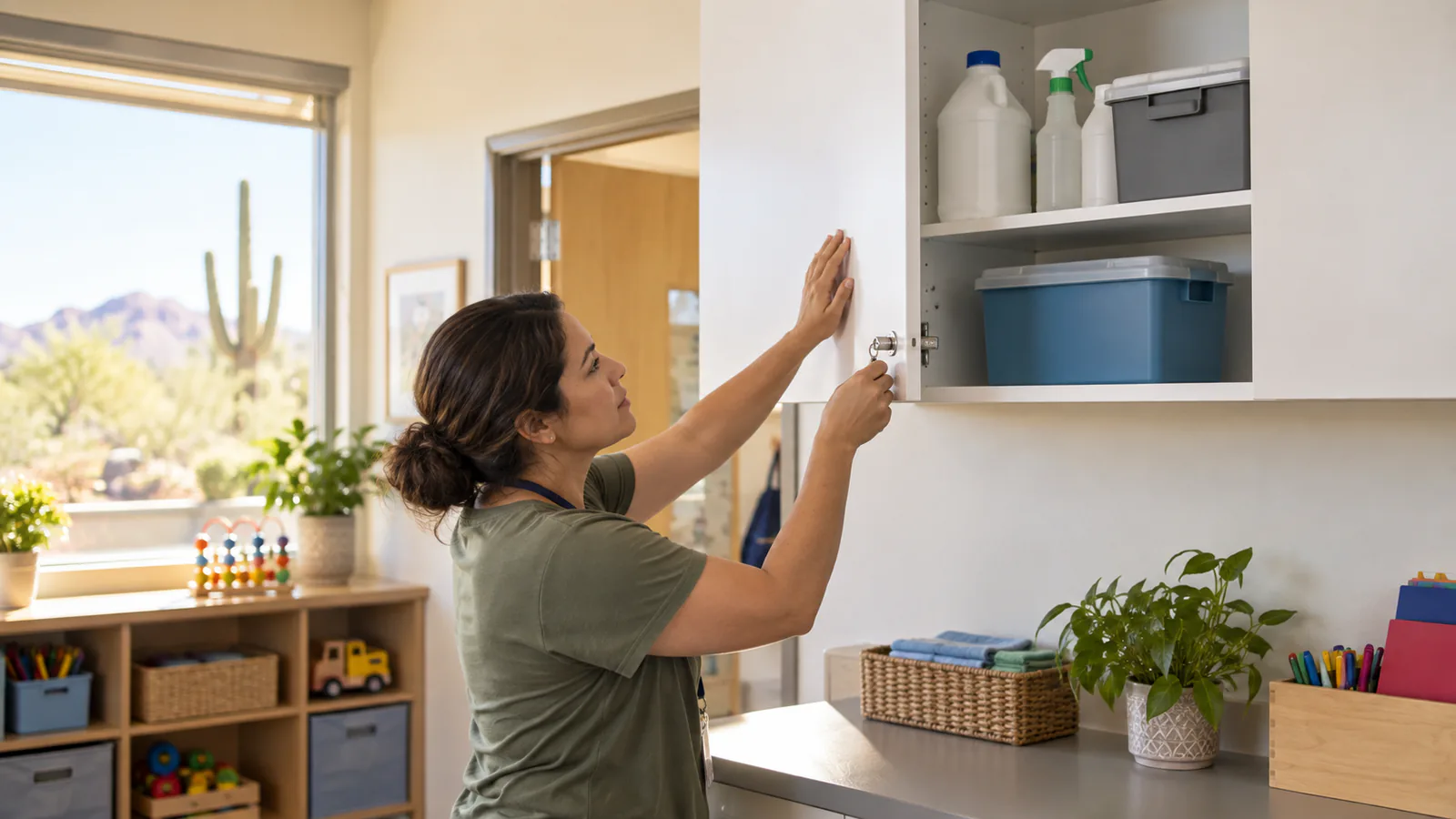
- Lock up medicines and cleaners.
- Keep them clearly labeled.
- Store them out of children’s reach, including in church kitchens, nurseries, and custodial closets.
- Post 1-800-222-1222 near every phone and save it in staff cell phones.
Children’s medicines at daycare and school should be stored the way your medication policy says: labeled, secured, and out of reach.
This article is general education. It does not replace hands-on CPR and first aid training, where you practice these skills with an instructor.
How LP Health Directions can help
- CPR and First Aid classes in Phoenix and Tucson that cover poisoning, burns, and bites and stings.
- On-site Group Training for daycares, schools, churches, and workplaces.
- First Aid Solutions for gloves, first aid kits, and supplies.
- AED Solutions so an AED is ready if someone stops breathing.
- Ready to train your team? Book a class today.
Sources
- HRSA, Poison Help
- Banner Health, Banner Poison and Drug Information Center
- Arizona Poison and Drug Information Center, About Us
- American Red Cross, Learn First Aid
- American Heart Association, 2025 Guidelines for CPR and ECC
Reviewed September 28, 2026. This article provides general education and does not replace first aid and CPR training, medical advice, or 911 guidance.