

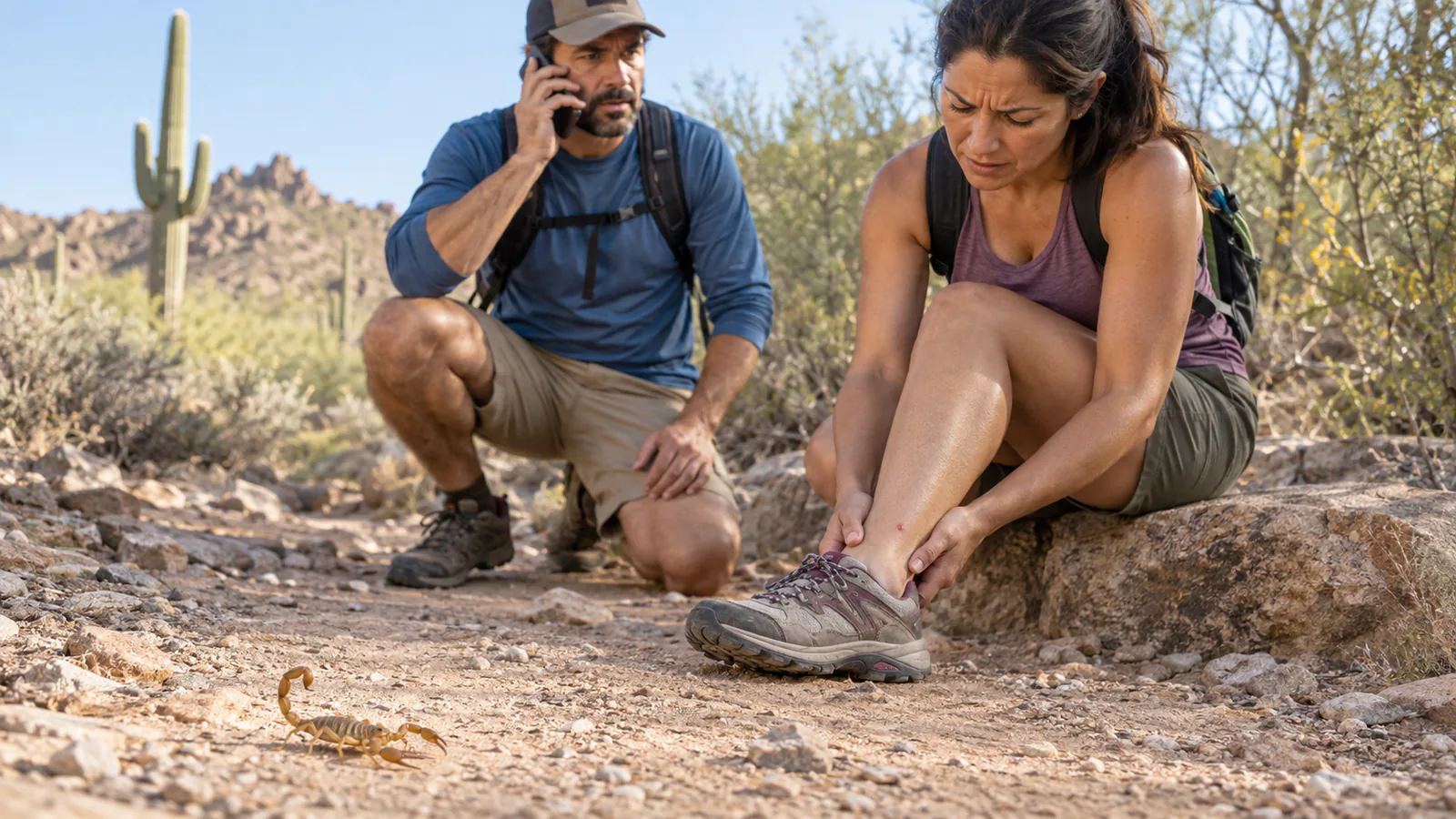
Most bites and stings need simple care: wash the area with soap and water and put ice wrapped in a towel on it for up to 20 minutes. The exceptions matter. A snakebite needs 911 and no ice at all, and any bite or sting that causes trouble breathing or symptoms that spread through the body is an emergency.
In Arizona, scorpions and rattlesnakes are common, so daycare, school, and church staff should know what to do before it happens.
How common are scorpion stings and rattlesnake bites in Arizona?
Very common. In 2025, Banner’s poison center alone handled nearly 2,300 scorpion stings and over 100 rattlesnake bites.
Arizona has two poison centers: Banner Poison and Drug Information Center in Phoenix and the Arizona Poison and Drug Information Center in Tucson. Both answer at the same number, 1-800-222-1222, 24 hours a day. Save it in your phone.
What should you do first for any bite or sting?
- Make sure the animal or insect is no longer a threat. Move the person away if needed.
- Put on gloves and get the first aid kit.
- Remove rings, watches, and tight clothing from the area before it swells.
- Wash with soap and water, control any bleeding, and keep the area still.
- Put ice wrapped in a towel on the area for up to 20 minutes. Do not use ice for a snakebite.
Call 911 for bleeding you can’t control, a severe allergic reaction, breathing problems, or symptoms spreading through the body, such as dizziness, confusion, or cramps.
What do you do for a scorpion or spider sting?
Signs can include severe pain at the site, muscle cramps, headache, fever, vomiting, breathing trouble, and seizures.
Give the basic care above, then call Poison Control at 1-800-222-1222 for advice. Call 911 instead for trouble breathing, symptoms spreading through the body, dizziness, or confusion.
Children are at higher risk from bark scorpion stings. If you care for young children, have a low threshold for calling.
What should you do for a rattlesnake bite?
Treat every snakebite as venomous. Signs can include swelling and increasing pain at the bite, nausea, vomiting, sweating, and weakness.
- Call 911.
- Remove jewelry and tight clothing near the bite.
- Keep the person still, and keep the bitten arm or leg still.
- Stay with them until EMS arrives.
Just as important is what not to do: no ice, no tourniquet, no cutting the bite, and no sucking out the venom.
Don’t try to catch or touch the snake. Even an injured or dead snake can bite. Keep everyone, especially children, away from it.
How do you get a bee stinger out?
Scrape the stinger away with the edge of a card, like a credit card or ID badge. Don’t squeeze it with your fingers or tweezers.
Signs of a bee or wasp sting are usually pain, itching, and swelling where the sting happened. Wash the area and use ice wrapped in a towel for comfort.
Then watch the person for at least 30 minutes. Some people have a severe allergic reaction to stings. If the person has a known allergy or has trouble breathing, call 911 and help them use their epinephrine auto-injector. Our article on severe allergic reactions and epinephrine walks through the steps.
A local reaction is not the same as a severe allergic reaction
Pain, itching, and swelling right where the sting happened is a local reaction. It is uncomfortable, and it is handled with washing, ice, and watching.
A severe allergic reaction involves the whole body. Look for trouble breathing, a swollen tongue or face, a fast heartbeat, or dizziness. Those signs mean call 911 and get the person’s epinephrine auto-injector and an AED right away.
The 30-minute watch after a sting is how you tell the difference. A local reaction stays local. A severe reaction spreads.
How do you remove a tick?
Use tweezers to grab the tick close to the skin and pull straight out until it lets go. Never use heat, such as a match, to make it back out.
Save the tick in a bag, then wash the area. See a health care provider if the site gets worse or the person develops redness, a bullseye rash, or flu-like symptoms in the days that follow.
What about dog, cat, or human bites?
Children bite each other in daycare, and pets bite at home. Look for broken skin, bleeding, redness, and swelling.
Wash the bite well and control the bleeding with pressure. Call 911 if the bleeding won’t stop or the wound is large. For an animal bite, ask the owner about the pet’s rabies vaccine. For heavy bleeding, see how to stop severe bleeding.
What if someone touches a bat?
Any contact with a bat needs medical care right away. Don’t wait for symptoms. If a bat turns up in a classroom, nursery, or sanctuary, keep children away from it.
This article is general education. It does not replace hands-on CPR and first aid training, where you practice these skills with an instructor.
How LP Health Directions can help
Bites and stings are part of every first aid class we teach, with real Arizona examples.
- CPR and First Aid classes at our Phoenix and Tucson Training Sites.
- On-site Group Training for daycares, schools, churches, and workplaces.
- First Aid Solutions to keep your kits stocked with gloves, cold packs, and tweezers.
- Review the full First Aid guide, including poisoning first aid.
- Book a class or contact us to schedule training for your staff.
Sources
- Banner Health, Banner Warns about Rattlesnakes and Scorpions (March 2026)
- Banner Health, Banner Poison and Drug Information Center
- Arizona Poison and Drug Information Center, About Us
- HRSA, Poison Help (1-800-222-1222)
- FARE, How to Administer Epinephrine
- American Red Cross, Learn First Aid
Reviewed September 28, 2026. This article provides general education and does not replace first aid and CPR training, medical advice, or 911 guidance.