

A stroke is a blood-flow problem in the brain. Either a blood vessel is blocked, or a vessel is bleeding. Brain cells begin to die quickly, so every minute counts.
If you see a drooping face, a weak arm, or slurred speech, call 911 right away. Then note the time the symptoms started, help the person get comfortable, and stay with them until EMS arrives.
How common is stroke?
More than 795,000 people in the United States have a stroke each year, about one every 40 seconds, according to the CDC. If you work with older adults at church or in a senior program, or simply work alongside adults, you may someday be the first person to notice.
What are the F.A.S.T. signs of a stroke?
F.A.S.T. is the quick check we teach in class. Each step takes a few seconds.
- F: Face drooping. Ask them to smile. Does one side of the face droop?
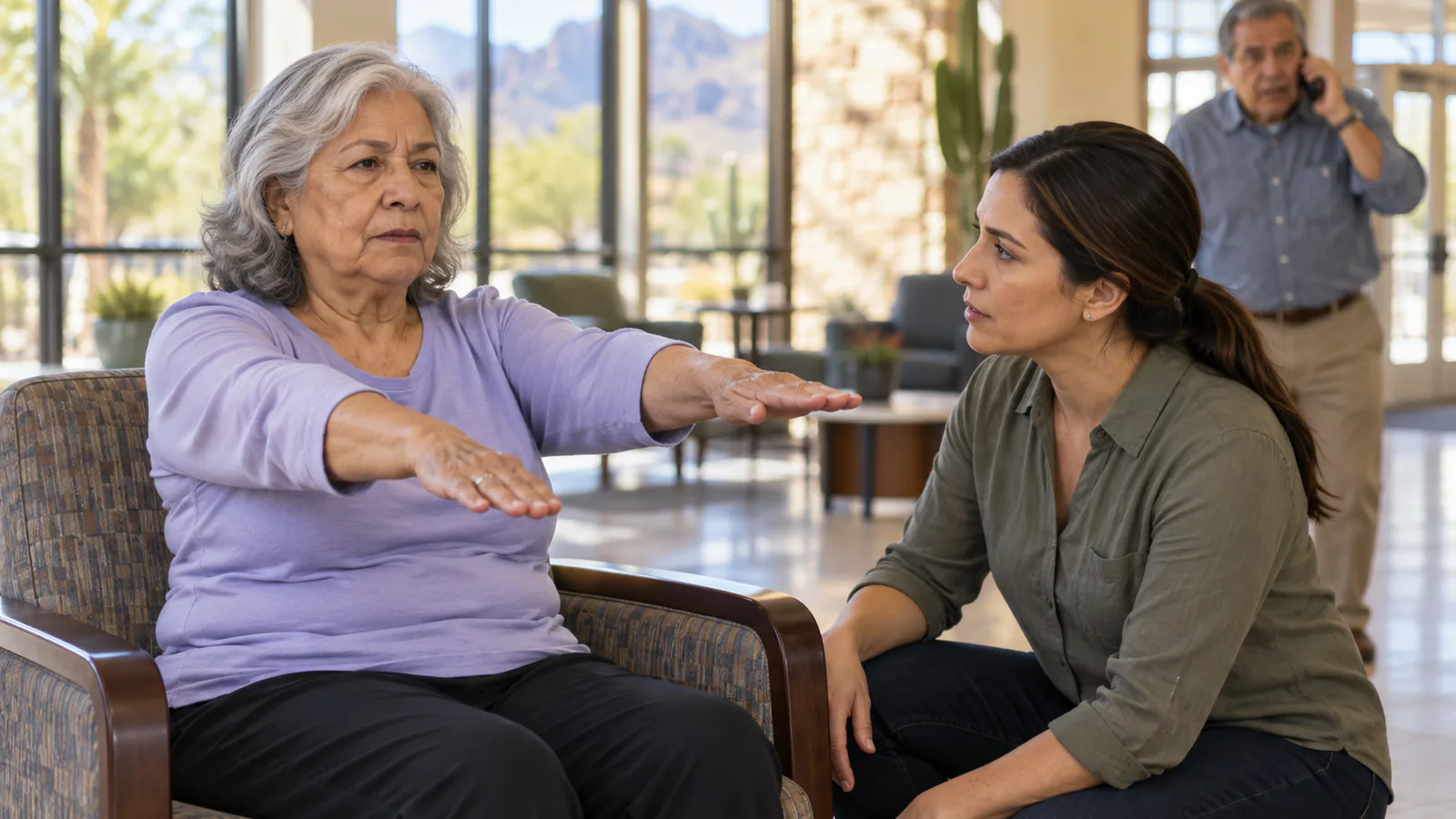
- A: Arm weakness. Ask them to raise both arms. Does one arm drift down?
- S: Speech difficulty. Is their speech slurred or strange, or can they not speak at all?
- T: Time to call 911. If you see any of these signs, call right away.
You do not need all three signs. One is enough to call.
What other signs can a stroke cause?
Strokes do not always look like the F.A.S.T. signs. Other sudden signs include:
- Blurred or double vision
- A severe headache
- Numbness or weakness on one side of the body
- Trouble walking
- Dizziness or loss of balance
The key word is sudden. A person who was fine at lunch and now cannot find their words, or who suddenly stumbles and cannot see clearly, needs 911.
What is BE FAST?
You may also see BE FAST. The CDC and the American Stroke Association use this version, which adds two letters at the front: B for Balance (sudden loss of balance or coordination) and E for Eyes (sudden vision trouble). The rest is the same as F.A.S.T.
Both versions teach the same idea: spot the signs, and call 911 fast. Use whichever one you remember.
What should you do if you think someone is having a stroke?
- Call 911 and get an AED. Put the phone on speaker so your hands are free. If you cannot talk safely, you can text 911 in every Arizona county.
- Note the time. Write down when the symptoms started. If you do not know, note the last time someone saw them acting normal. Tell EMS.
- Help them sit or lie down comfortably. Let them rest in whatever position is easiest for them. There is no need to raise their feet; that step is for shock, not stroke.
- Stay with them. Keep them calm and keep watching them until EMS arrives.
- Do not give aspirin. Leave all medicine decisions to EMS.
- Be ready for CPR. If they become unresponsive and stop breathing normally, start CPR and use the AED as soon as it arrives.
Why does the time the symptoms started matter so much?
The time symptoms started affects which treatments are possible at the hospital, and the medical team cannot find it out on their own. A caregiver who says “She was fine at 10:15 and started slurring at 10:30” gives them exactly what they need.
If the person was asleep or alone, the clock starts at the last time anyone knew they were normal. Share that time, not the time you found them.
A stroke is not the same as a heart attack
Both are sudden, serious blood-flow problems, but they affect different organs.
- A heart attack is a blockage that cuts off blood to part of the heart muscle. Signs include chest pressure, pain in the arm, back, neck, jaw, or stomach, shortness of breath, and a cold sweat.
- A stroke affects the brain. Signs include a drooping face, a weak arm, slurred speech, vision trouble, or loss of balance.
The first aid is also different in one important way: aspirin. For a heart attack, your class teaches that the person can chew aspirin if they are not allergic, not bleeding, and have no stroke signs. For a stroke, give no aspirin.
Why? Some strokes are caused by bleeding in the brain, and aspirin can make bleeding worse. You cannot tell which kind of stroke someone is having. So if you see stroke signs, even alongside chest pain, skip the aspirin and let EMS decide.
For both emergencies, the first step is the same: call 911 and get an AED.
This article is general education. It does not replace hands-on CPR and first aid training, where you practice these skills with an instructor.
How LP Health Directions can help
Our classes follow the 2025 American Heart Association (AHA) Guidelines and cover stroke, heart attack, and CPR, plus when to call 911.
- CPR and First Aid classes in Phoenix and Tucson
- On-site Group Training for daycares, schools, churches, and workplaces
- AED Solutions to help your site be ready for cardiac arrest
- See every topic in the First Aid Guide, or book a class
Sources
- CDC, Stroke Facts
- CDC, Signs and Symptoms of Stroke
- American Stroke Association, Stroke Symptoms
- CDC, About Heart Attack
- American Heart Association, 2025 Guidelines for CPR and Emergency Cardiovascular Care
- Arizona 9-1-1 Program, Text-to-911
Reviewed September 28, 2026. This article provides general education and does not replace first aid and CPR training, medical advice, or 911 guidance.