

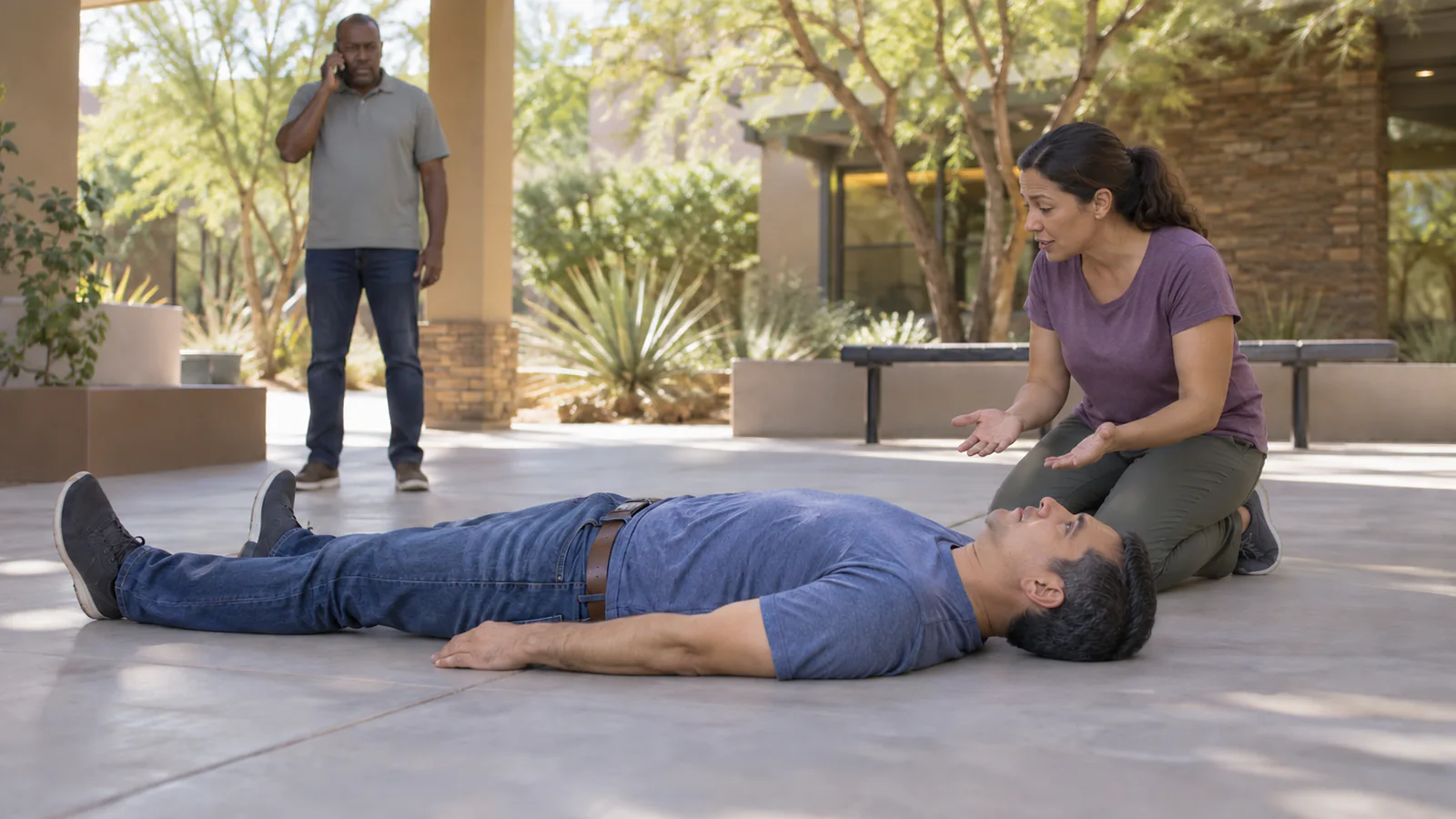
After a blow to the head, stop all activity and get the person checked by a health care professional. Signs of a concussion, like confusion, headache, dizziness, or vomiting, can take hours or even days to show up.
If you think the neck or spine is hurt, call 911 and keep the person as still as possible. Move them only if they are in danger, vomiting, or need CPR.
What is a concussion?
A concussion happens when a blow to the head or body moves the brain inside the skull. The blow does not have to be to the head itself. A hard hit to the body can do it too.
Common causes include falls, blows to the head, and car or bike crashes. Concussions are more common in children, teens, and older adults, which is exactly who daycare, school, and church staff look after. A child who tumbles off the monkey bars and an older adult who slips in the church parking lot are both at risk.
What are the signs of a concussion?
Signs can appear right away, or they can take hours or even days to show. Watch for:
- Confusion
- Dizziness
- Headache
- Trouble concentrating or remembering
- Nausea or vomiting
- Vision trouble
- Sensitivity to light or noise
- Personality changes
- Sometimes a seizure or passing out
Young children may not be able to tell you how they feel. Pay attention to changes in how they act, play, or respond to you, and tell the parent or caregiver what happened so they can keep watching at home.
What should I do after a head injury?
- Stop all activity. No going back to the game, the playground, or the job.
- Get them evaluated by a health care professional.
- No physical activity until they are cleared. That includes sports, driving, and using machinery.
Call 911 if they become less alert, get worse, or become unresponsive. Be ready to start CPR if they stop breathing normally.
One more warning for anyone who cares for older adults: a person on blood thinners who has a bump or blow to the head should be seen right away, even if they have no symptoms, according to the CDC. Our article on what to do when someone falls explains more.
What are the signs of a neck or spine injury?
Suspect a neck or spine injury if the person has:
- Tingling, numbness, or weakness in the arms or legs
- Pain in the head, neck, or back
- Trouble moving part of the body
Think about how they got hurt, too. A hard fall, a crash, or a dive into shallow water can all injure the neck or spine. In Arizona, where backyard pools are everywhere, anyone who dove into shallow water may have a neck or spine injury.
What should I do for a neck or spine injury?
- Call 911 and send someone for the first aid kit and an AED.
- Have the person stay as still as possible. Tell them not to move their head.
- Stay with them and keep talking to them until help arrives.
Do not roll them onto their side into the recovery position unless you have to leave them or they are vomiting.
When is it OK to move someone with a possible spine injury?
Only when you have to. That means:
- They are in danger where they are (for example, in the water or in traffic)
- They are vomiting or at risk of choking
- They need CPR
If you must move them, get help if you can. Keep the head, neck, and spine in a straight line and avoid twisting. For a person in the water, move them only as much as you need to get them out safely. See what to do in a drowning emergency.
If they are unresponsive and not breathing normally, start CPR. Saving their life comes first.
A concussion is not the same as “just a bump”
Kids bump their heads all the time, and most of those bumps really are minor. That is exactly why concussions get missed.
A concussion is a brain injury. The person may not pass out. They may look fine, get up, and say they’re OK. Signs like headache, confusion, or vomiting can show up hours or even days later.
So treat a real blow to the head as a possible concussion. Stop the activity, get them checked, tell the family what happened, and keep them out of physical activity until a health care professional clears them. If they get worse or become less alert, call 911.
This article is general education. It does not replace hands-on CPR and first aid training, where you practice these skills with an instructor.
How LP Health Directions can help
Head injuries happen on playgrounds, in hallways, and at church events. Knowing what to do keeps a bad moment from getting worse.
- CPR and First Aid classes in Phoenix and Tucson, based on the 2025 American Heart Association (AHA) Guidelines
- On-site Group Training for daycares, schools, churches, and workplaces
- First Aid Solutions for first aid kits your staff can grab fast
- Related guides: seizure first aid and our full First Aid Guide
- Ready to train your team? Book a class.
Sources
- Centers for Disease Control and Prevention, HEADS UP
- Centers for Disease Control and Prevention, Facts about Concussion and Brain Injury
- American Heart Association, 2025 Guidelines for CPR and Emergency Cardiovascular Care
- American Red Cross, Learn First Aid
Reviewed September 28, 2026. This article provides general education and does not replace first aid and CPR training, medical advice, or 911 guidance.