

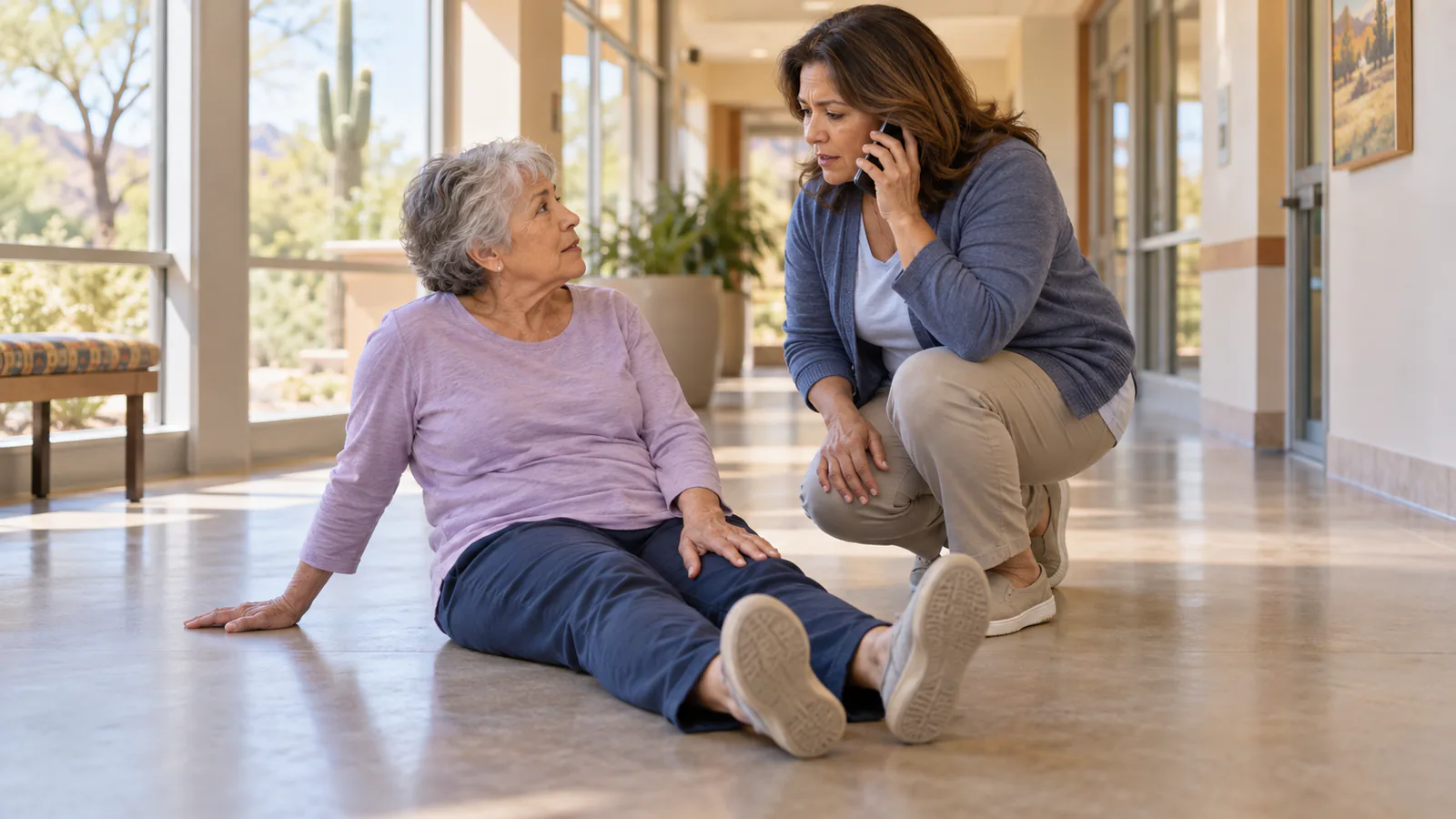
When someone falls, the first rule is simple: don’t rush them up. Kneel down, ask what happened and what hurts, and check that they are alert and making sense before anyone tries to lift them.
If they hit their head, have neck or back pain, feel numbness, can’t stand, or have a leg that looks shorter or turned outward, keep them still and call 911. If they are not hurt, help them up slowly using a sturdy chair.
Why falls matter so much for churches, schools, and daycares
Falls are one of the most common emergencies our students handle. At church it is often an older adult who trips on a step, slips in a restroom, or stumbles in the parking lot. At school and daycare it is a child who falls off playground equipment or down the stairs.
Most falls end with a bruise. First aid is about spotting the ones that don’t, before someone pulls the person to their feet.
What should I do first when someone falls?
Make sure the area is safe, then get down to their level. Before anyone moves them:
- Ask what happened. Did they trip, or did they feel dizzy or pass out first?
- Ask what hurts. Let them tell you before you touch.
- Check that they’re alert and making sense. Confusion after a fall is a warning sign.
If they want to get up right away, it is fine to say, “Let’s take a minute first.”
What are the signs of a head, neck, or spine injury?
Keep them still and call 911 if they:
- Hit their head
- Have neck or back pain
- Feel numbness, tingling, or weakness
Do not sit them up, roll them, or help them stand. Moving someone with a spine injury can make it worse. Move them only if they are in danger, vomiting, or need CPR. Our article on head, neck, and spine injuries covers this in more detail.
How can I tell if someone broke their hip?
A broken hip is a serious risk when an older adult falls. Possible signs include:
- They can’t get up, or can’t stand or put weight on the leg
- Severe pain in the hip or groin
- The leg on the injured side looks shorter than the other
- The leg on the injured side is turned outward
These signs come from the Mayo Clinic and Cedars-Sinai. If you see any of them, keep the person still and as comfortable as you can, don’t try to stand them up, and call 911.
Don’t try to straighten the leg. For other suspected breaks, see our guide to broken bone first aid.
What if they take blood thinners and hit their head?
Many older adults take blood thinners. According to the CDC, a person on blood thinners who has a bump or blow to the head should be seen by a health care provider right away, even if they have no symptoms.
Bleeding inside the head can develop slowly. Someone can look and feel fine at first and get worse hours later. If you are not sure whether they take blood thinners, ask them or a family member. When in doubt, get them checked.
How do I help someone up safely?
Only help them up if they are not hurt and feel ready. Then:
- Bring a sturdy chair close to them for support.
- Help them up slowly. There is no hurry.
- Have them sit and rest before they try to walk.
If they can’t get up, or it hurts to try, stop. Keep them still and call 911.
What should I watch for after a fall?
Tell family or caregivers what happened so they can watch too. Over the next day, look for:
- Confusion
- Headache
- Vomiting
- Unusual sleepiness
Any of these can mean a head injury. Get them checked, and call 911 if they become less alert or get worse.
Why did they fall?
Always ask. Some falls are not just trips. Dizziness, fainting, low blood sugar, or a stroke can cause a fall, and those need care too.
If they felt faint first, see fainting first aid. If they have a drooping face, arm weakness, or slurred speech, call 911 right away and see stroke signs and what to do.
“They seem fine” is not the same as “they’re not hurt”
After a fall, everyone wants to believe it’s OK, including the person who fell.
But some serious injuries don’t show up right away. A head injury can take hours to cause symptoms, especially in someone on blood thinners. Someone with a broken hip may be sitting calmly on the floor until they try to stand.
That is why the order matters: ask, check, and only then help them up.
This article is general education. It does not replace hands-on CPR and first aid training, where you practice these skills with an instructor.
How LP Health Directions can help
We train church, school, and daycare teams to handle falls and the emergencies that come with them.
- CPR and First Aid classes in Phoenix and Tucson, based on the 2025 American Heart Association (AHA) Guidelines
- On-site Group Training for churches, schools, daycares, and workplaces
- First Aid Solutions to keep a well-stocked first aid kit on hand
- More topics in our First Aid Guide
- Ready to train your staff or volunteers? Book a class.
Sources
- Mayo Clinic, Hip fracture: Symptoms and causes
- Cedars-Sinai, Hip Fracture
- Centers for Disease Control and Prevention, Facts about Concussion and Brain Injury
- Centers for Disease Control and Prevention, HEADS UP
- Mayo Clinic, Fractures (broken bones): First aid
Reviewed September 28, 2026. This article provides general education and does not replace first aid and CPR training, medical advice, or 911 guidance.