

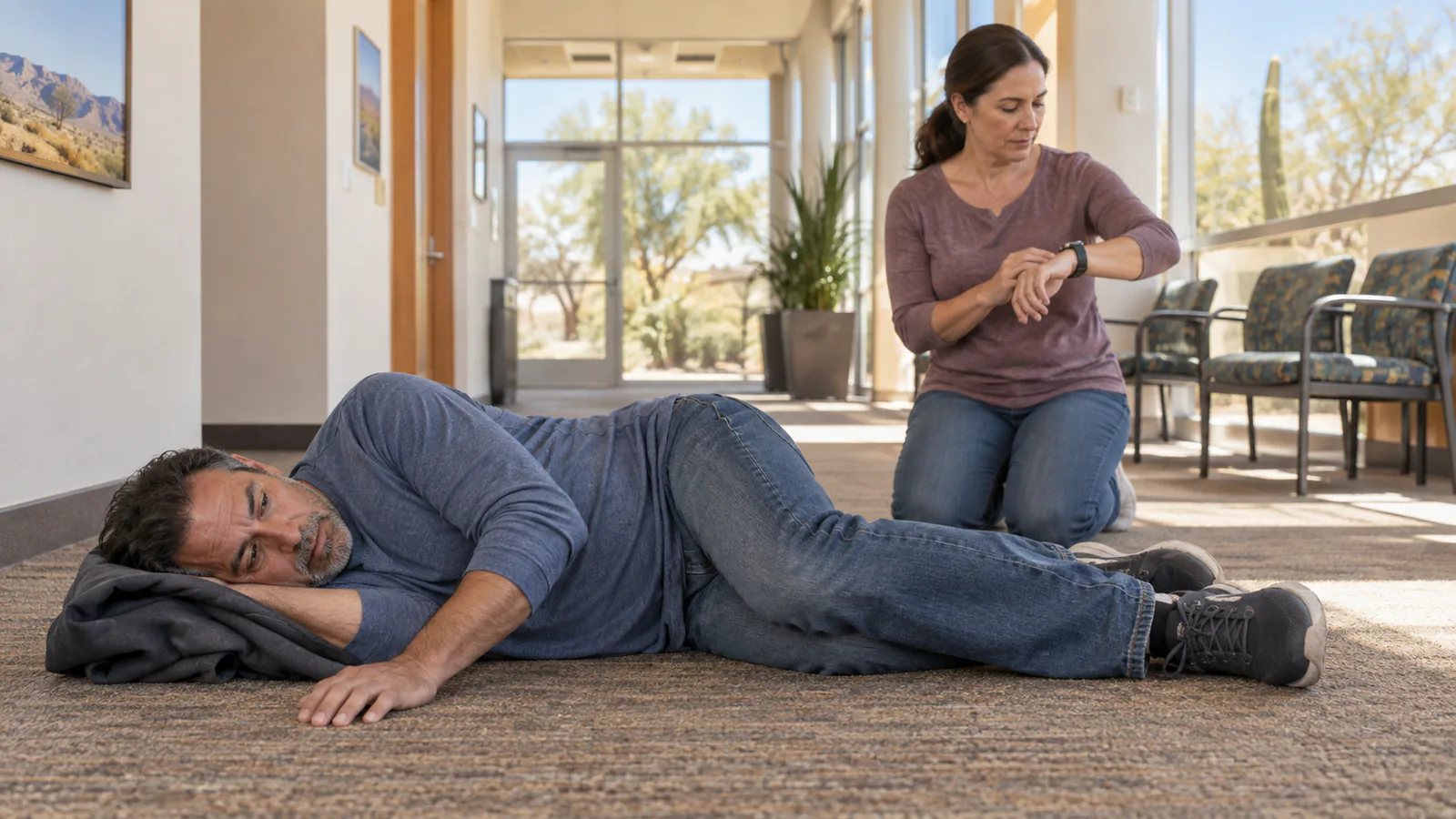
During a seizure, your job is to keep the person safe until it ends. Time it, ease them to the floor, and cushion their head. Never hold them down and never put anything in their mouth. When the shaking stops, check their breathing and roll them onto their side.
Most seizures stop on their own within a few minutes. Watching one can be frightening, especially if it is a child in your classroom or a member of your congregation, but the steps are simple.
What causes a seizure?
Epilepsy is the cause many people think of first, but it is not the only one. Seizures can also be caused by:
- A head injury
- Low blood sugar
- Prolonged heat exposure
- Poisoning
- Cardiac arrest
That list is why a seizure in someone who has never had one before is treated as an emergency. The cause may be something that needs care right away.
What does a seizure look like?
During a seizure, you may see:
- Stiffening of the body
- Loss of consciousness and collapse
- Jerking or shaking
- A glassy stare
Afterward, the person is often confused, slow to respond, or seems to be asleep.
What should you do during a seizure?
- Time it. Check a watch or phone as soon as it starts. How long it lasts decides whether you call 911.
- Ease them down. Gently lower them to the floor.
- Clear the area. Move chairs, tables, and anything hard away from them.
- Cushion the head. Put something soft under it, like a folded jacket or a sweater.
- Stay with them. Keep other people back and keep watching.
Why shouldn’t you hold someone down or put something in their mouth?
Never hold a person down or pin their arms during a seizure. Your job is to keep hard objects away from them, not to control their movements.
Many people still believe a person having a seizure can swallow their tongue. They cannot. Putting anything in their mouth, including a spoon, a wallet, or your fingers, can break teeth or block the airway. Leave the mouth alone.
What should you do after a seizure stops?
- Check responsiveness and breathing. Tap and shout, then look at the chest for 5 to 10 seconds.
- Not breathing normally? Start CPR. Send someone to call 911 and get an AED.
- Breathing normally, with no head or spine injury suspected? Roll them onto their side into the recovery position.
- Stay with them and keep checking their breathing until they are fully awake or help arrives.
The recovery position keeps the airway open and lets vomit drain. Speak calmly as they come around, because they may not know where they are.
When should you call 911 for a seizure?
Call 911 if any of these is true:
- It is their first seizure.
- It lasts longer than 5 minutes.
- A second seizure starts.
- They have trouble breathing or staying awake.
- They were injured.
- It happened in water.
- They have diabetes or heart disease.
- They are pregnant.
When you are not sure, call. For a child with a known seizure disorder, follow the child’s care plan as well.
A child with a fever who has a seizure needs 911 too; see our fever first aid guide. If the person has diabetes, low blood sugar may be the cause.
What else helps at a school, daycare, or church?
Look for medical jewelry, such as a bracelet or necklace. It can tell you the person has epilepsy or diabetes. In a large school or church building, send someone to meet EMS at the door or parking lot so they can find you fast.
Summer events matter here too. Prolonged heat exposure can cause a seizure, so see heat stroke and heat exhaustion.
A seizure after a collapse is not always epilepsy
This is the most important point in this article. A person in cardiac arrest may briefly jerk or twitch as they collapse. To a bystander, it can look exactly like a seizure.
The difference is breathing. After a seizure, the person usually breathes on their own. In cardiac arrest, they are not breathing normally, or they are only gasping. Gasping is not breathing.
So when anyone collapses and shakes, watch closely once the movement stops. If they are unresponsive and not breathing normally, start CPR and use an AED right away. Do not assume it was “just a seizure” and wait. Giving CPR to someone who does not need it is far better than withholding it from someone who does.
Learn more in how to do CPR and What Is an AED and What Does It Actually Do?
This article is general education. It does not replace hands-on CPR and first aid training, where you practice these skills with an instructor.
How LP Health Directions can help
- CPR and First Aid classes in Phoenix and Tucson where you practice the recovery position and CPR.
- On-site Group Training for daycares, schools, churches, and workplaces.
- AED Solutions to put an AED within reach in your building.
- Ready to train your team? Book a class today.
Sources
- Epilepsy Foundation, Seizure First Aid
- American Red Cross, Seizures
- American Heart Association, 2025 Guidelines for CPR and ECC
- American Heart Association, Hands-Only CPR
Reviewed September 28, 2026. This article provides general education and does not replace first aid and CPR training, medical advice, or 911 guidance.