

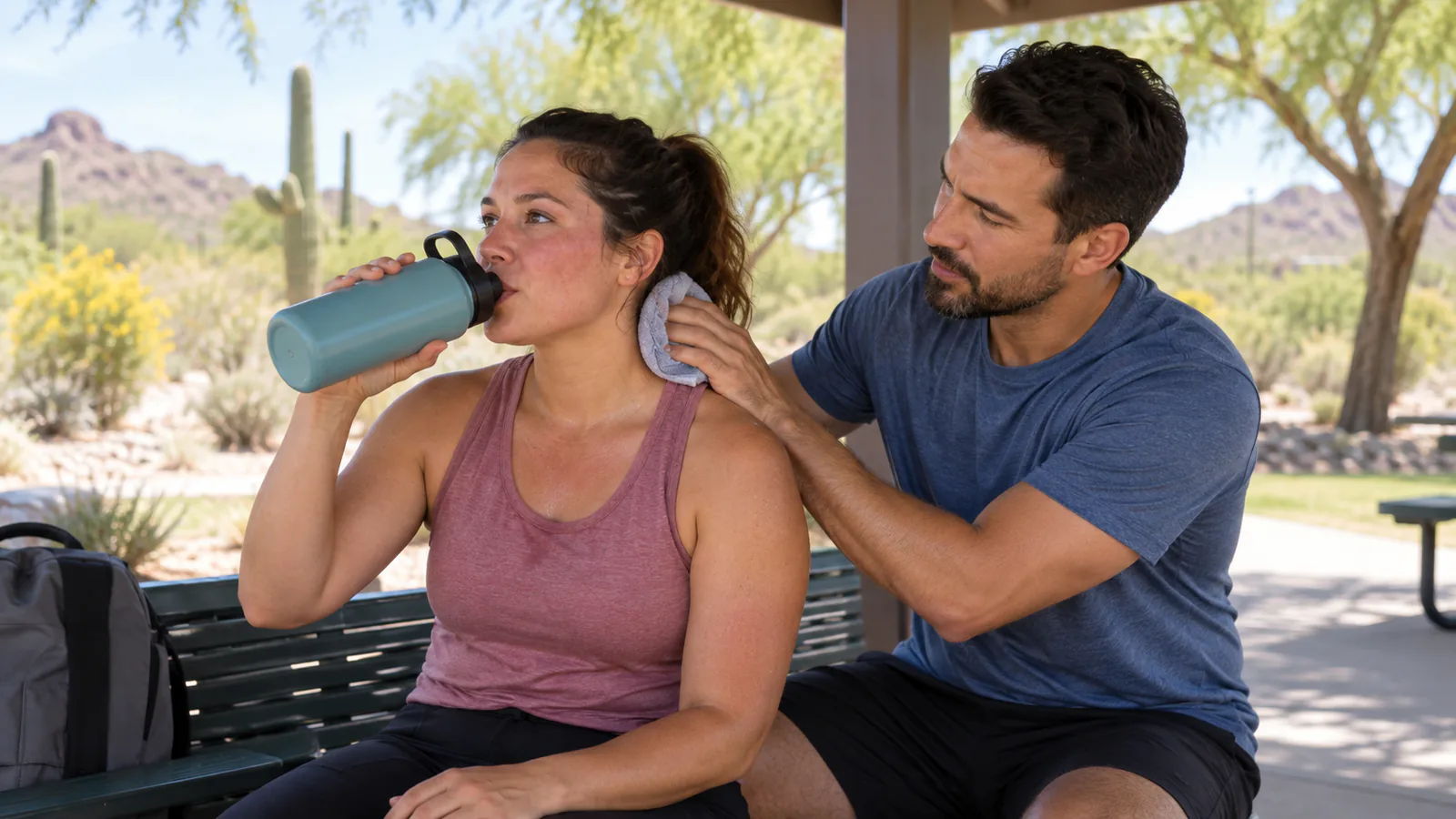
Heat exhaustion is the body struggling to keep up with the heat. Heat stroke is the body losing that fight, and it is a life-threatening emergency. The clearest dividing line is the brain: if someone in the heat becomes confused, slurs their words, has a seizure, or collapses, treat it as heat stroke, call 911, and start cooling them right away.
In Arizona, this is not a rare problem. Maricopa County confirmed 430 heat-related deaths in 2025 and 608 in 2024. Young children and older adults are especially vulnerable, and they are the people daycare, school, and church staff look after every day.
Who is most at risk from the heat?
Anyone can get sick in extreme heat, but young children and older adults are at the highest risk. Think about the places where that happens in everyday life here:
- A preschool class playing outside at recess on a hot afternoon.
- A church picnic, outdoor service, or volunteer event that runs longer than planned.
- An older adult who walks to the mailbox, works in the yard, or waits in a hot parking lot.
The Arizona Department of Health Services (ADHS) publishes heat safety tips for families and workplaces. They are worth sharing with staff before summer starts.
What are the stages of heat-related illness?
Heat illness usually builds in stages. Catching it early is the easiest way to keep it from becoming heat stroke.
- Dehydration: weakness, thirst, dry mouth, chapped lips, dizziness, less urination, and sometimes confusion.
- Heat cramps: painful muscle spasms in the arms, legs, belly, or back.
- Heat exhaustion: heavy sweating, weakness, fatigue, fainting, cramps, headache, nausea, or vomiting.
- Heat stroke: like heat exhaustion but much worse, with confusion, slurred speech, agitation, high body temperature, seizures, or collapse.
What should you do for dehydration or heat cramps?
For dehydration, move the person to a cool, shaded place. Have them slowly drink water, juice, or a sports drink. If drinking makes them vomit, stop.
For heat cramps, stop the activity and get them out of the heat. Remove extra clothing, put a cool cloth on the skin, and offer fluids. Gentle stretching can help, and so can ice wrapped in a towel for up to 20 minutes if they can tolerate it.
Prevention works best. Build water breaks into recess and outdoor events, and remind children to drink.
How do you treat heat exhaustion?
- Move them to a cool, shaded place, indoors if possible.
- Give fluids if they are alert and can swallow.
- Remove as much clothing as you reasonably can.
- Cool them with cold-water spray or cool damp cloths on the neck, armpits, and groin. Stop if they start to shiver.
- Call 911 if they do not get better.
Stay with them. Heat exhaustion can turn into heat stroke, so keep watching how they are thinking and talking.
How do you cool someone with heat stroke?
Heat stroke needs two things at once: 911 and fast cooling. Send someone to call while you start cooling. If there is an AED nearby, have someone bring it.
- Best option: put them in cool water up to the neck, such as a pool or tub, for up to 15 minutes or until they start acting normally. Stay with them.
- If you cannot immerse them: spray or pour cool water over them and place towel-wrapped ice packs on the neck, armpits, and groin.
- Stop cooling once they act normally. This prevents overcooling.
- Watch children closely. Their small bodies cool fast.
If they become unresponsive and stop breathing normally, start CPR and use the AED. Our guide on how to do CPR walks through the steps.
Heat exhaustion is not the same as heat stroke
People often use the two terms as if they mean the same thing. They do not. A person with heat exhaustion feels terrible but is still thinking clearly. A person with heat stroke is not. Confusion, slurred speech, strange behavior, a seizure, or collapse in the heat means heat stroke.
Many people learned that someone with heat stroke stops sweating. Sometimes they do. But the CDC’s National Institute for Occupational Safety and Health (NIOSH) notes that heat stroke can come with hot, dry skin or with heavy sweating, especially after hard work or exercise. Do not wait for dry skin. Confusion is the sign to act on.
The treatment is different too. Heat exhaustion usually improves with shade, fluids, and cooling. Heat stroke needs 911 and aggressive cooling right away.
Can you give water to someone with heat stroke?
For heat exhaustion, yes. For heat stroke, only if they are fully alert and can swallow safely. If they are confused, give nothing to drink. A confused person can choke. Focus on cooling their body from the outside instead.
Where can people cool off in Maricopa County?
Maricopa County runs cooling centers during extreme heat. To find one, call 2-1-1. This is a good number to post in a church office or share with older members, families, and volunteers who may not have a cool place to go.
For other heat topics, see our articles on fainting, seizures, and when to call 911.
This article is general education. It does not replace hands-on CPR and first aid training, where you practice these skills with an instructor.
How LP Health Directions can help
- CPR and First Aid classes in Phoenix and Tucson that cover heat illness, fainting, and seizures.
- On-site Group Training for daycares, schools, churches, and workplaces, scheduled before the hot season.
- First Aid Solutions with first aid kits for playgrounds, field trips, and outdoor events.
- Ready to train your team? Book a class or visit our Phoenix or Tucson Training Site.
Sources
- Maricopa County, 2025 Heat-Related Deaths Report
- Arizona Department of Health Services, Heat Safety
- Maricopa County, Extreme Heat
- CDC/NIOSH, Heat-related Illnesses
- American Heart Association, 2025 Guidelines for CPR and ECC
Reviewed September 28, 2026. This article provides general education and does not replace first aid and CPR training, medical advice, or 911 guidance.