

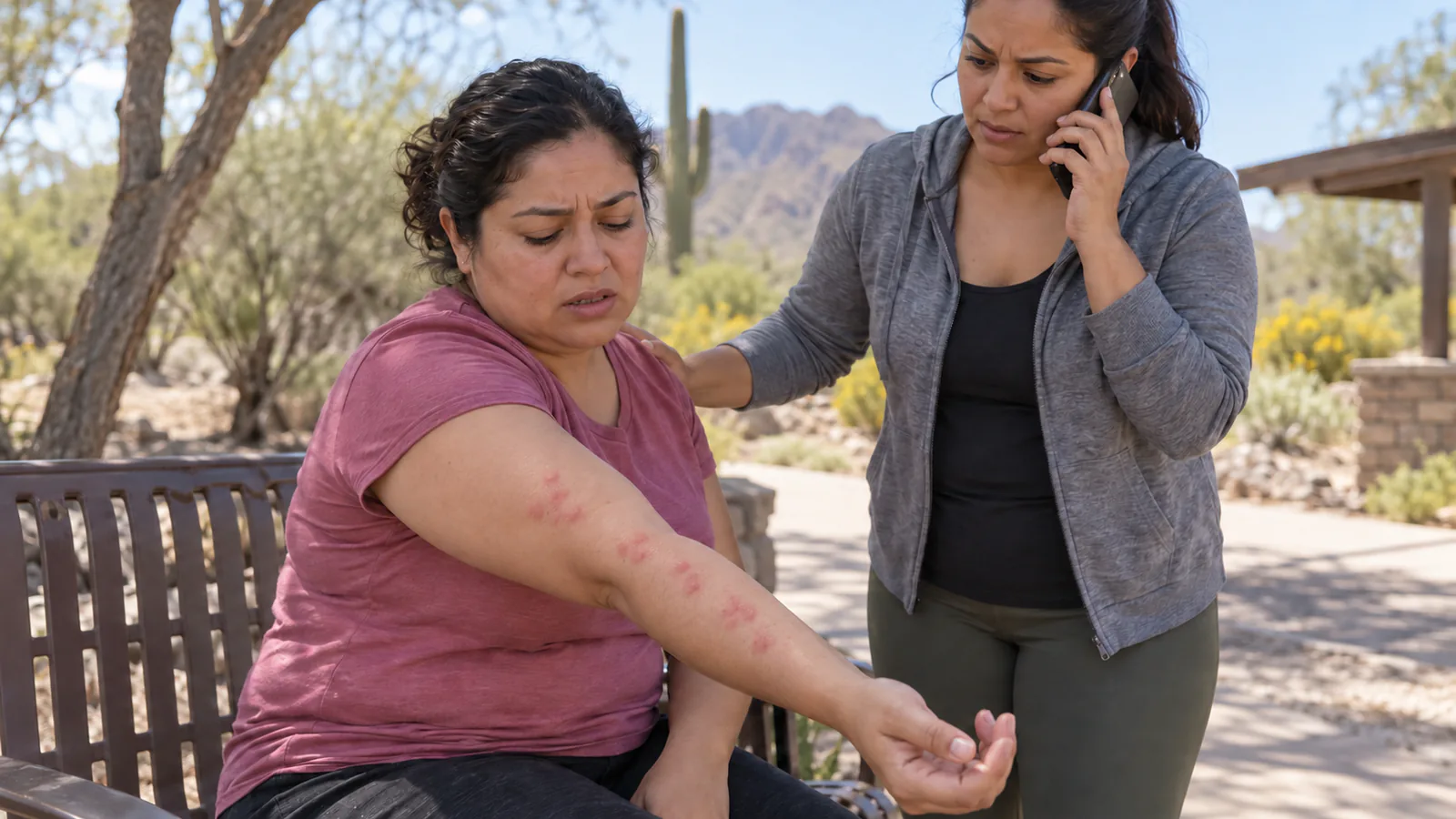
A severe allergic reaction, called anaphylaxis, can cause trouble breathing, a swollen tongue or face, a fast heartbeat, and dizziness. If you see those signs, call 911, get the person’s epinephrine auto-injector, and help them inject it into the outer thigh. Going through clothing is fine.
For daycare and school staff, this usually means a child with a known food allergy and an allergy action plan on file. Knowing the steps ahead of time helps you move quickly and calmly.
What causes a severe allergic reaction?
Common triggers include:
- Foods, such as nuts, dairy, eggs, and seafood
- Medicines
- Insect stings, especially bees
In a daycare or school, snack time and lunch are the moments to watch, especially for a child with a known food allergy. On a playground or church campus, a bee sting can do the same. If someone with a known bee allergy is stung, or has any trouble breathing after a sting, call 911 and get their auto-injector. See Bites and Stings First Aid.
A mild allergic reaction is not the same as anaphylaxis
Signs of a mild reaction include:
- Sneezing or a stuffy nose
- Itching around the eyes or on the skin
- Hives, a raised, red rash
Hives on their own are a mild sign. Stay with the person and watch them closely, though, because a mild reaction can become severe. If it does, you want to notice right away.
A severe reaction, or anaphylaxis, affects more than the skin. Look for:
- Trouble breathing
- Swelling of the tongue or face
- A fast heartbeat
- Nausea or dizziness
Any of these means call 911 and send for the person’s epinephrine auto-injector, the first aid kit, and an AED. If you are not sure which kind of reaction you are seeing, call 911.
How do you use an epinephrine auto-injector?
Use the person’s own prescribed device. Doses differ for children and adults. Follow the instructions printed on the device.
- Hold it in your fist without touching either end, and remove the safety cap.
- Have them sit. Hold the leg still.
- Press the tip firmly against the outer thigh, about halfway between the hip and the knee. Going through clothing is fine.
- Hold it in place as long as the device instructions say.
- Pull it straight out without touching the needle.
- Rub the spot for about 10 seconds.
- Note the time. Tell EMS what time you gave it, and hand them the used device.
When should you give a second dose?
If the person is not getting better, or EMS has not arrived within about 10 minutes of your call, give a second dose if one is available. This is one reason to note the time of the first dose. If you give two doses, tell EMS the time of each one and hand over both devices.
Keep watching their breathing the whole time. A severe allergic reaction can lead to cardiac arrest. If they become unresponsive and are not breathing normally, start CPR and use the AED. See How to Do CPR.
What should you do while you wait for EMS?
- Stay with the person and keep them seated and resting.
- Keep the first aid kit and the AED next to you.
- Send someone to meet EMS at the door or parking lot. On a large school or church campus, this helps EMS find you faster.
- Have the used auto-injector and the time of the dose ready to hand over.
- If a known cause is nearby, like a snack wrapper or a bee sting site, point it out.
If a child’s parent or guardian is there, ask them before you help. If not, consent is implied in an emergency. Daycare and school staff should also know their workplace policy and the child’s emergency forms, which usually cover this. For the legal side, see Arizona’s Good Samaritan Law and First Aid.
Can you use one child’s auto-injector on another child?
Current guidance is to use the person’s own prescribed device. Follow your workplace policy and the child’s allergy action plan, and call 911.
This is a good question to settle before an emergency. Ask where each child’s auto-injector is kept, who can get to it quickly, and what the child’s allergy action plan says.
Do they still need EMS if they feel better?
Yes. Symptoms can come back, and the person still needs to be checked by EMS or a health care professional. Keep them resting and stay with them until help arrives.
Breathing trouble does not always mean an allergy. For wheezing and coughing in someone with asthma, see What to Do During an Asthma Attack.
This article is general education. It does not replace hands-on CPR and first aid training, where you practice these skills with an instructor.
How LP Health Directions can help
Our classes cover allergic reactions and auto-injector steps alongside CPR and AED skills.
- CPR and First Aid classes in Phoenix and Tucson.
- On-site Group Training for daycares, schools, churches, and workplaces.
- First Aid Solutions to keep your first aid kits stocked and ready.
- Ready to learn? Book a class or browse the full First Aid Guide.
Sources
- FARE (Food Allergy Research and Education), How to Administer Epinephrine
- American Heart Association, 2025 Guidelines for CPR and Emergency Cardiovascular Care
- American Red Cross, Learn First Aid
Reviewed September 28, 2026. This article provides general education and does not replace first aid and CPR training, medical advice, or 911 guidance.